
The after-sales promise is a product: what Mall's 34.2% share teaches
Mall shops are 2.79% of storefronts but 34.2% of sales on three platforms. Before 11/11, small brands should write returns and warranty like a feature.

Picture a small shop on a Vietnamese marketplace at 11 p.m. A customer opens the chat box. They don't ask about price, because the price is already on the page. They ask three things: "Is this authentic?", "Can you issue an invoice?", and "If it breaks after two weeks, where do I send it and who pays shipping?" The person on chat types "Yes, we guarantee it's genuine," then opens the policy file to check how many days the return window is. While they look, the customer opens another tab and lands on a storefront with a Mall badge, selling the same item for a few tens of thousands of dong more.
Those three questions are about the product. The shop in this scene may sell a good item, but it ships it with a vague promise, and buyers weigh both before they tap "buy." Our view at 126Insights: authenticity, invoices, warranty and returns should be designed like a feature, with a spec and a named owner, because a group of buyers checks them as carefully as they check the price.
Sales are concentrating in 2.79% of storefronts
According to Metric.vn's report on Vietnam e-commerce in the first half of 2026, Mall shops (the marketplace badge for verified official brand stores) make up just 2.79% of storefronts across Shopee, Lazada and TikTok Shop, yet account for 34.2% of the three platforms' total sales. Compared with the same period last year, the number of Mall shops fell 6% while their sales rose 54%. Average sales per Mall shop therefore grew 63.8%.
Put another way: roughly one storefront in 36 is a Mall shop, but of every three dong shoppers spend on these platforms, nearly one goes to that group. There are fewer of them than last year, and they sell more.
Across the whole market, sellers are thinning out too. Using data from YouNet ECI, a Vietnamese social-listening and e-commerce analytics firm, Dân trí calculated that about 162,700 storefronts that had revenue in the first half of 2025 recorded none in the first half of 2026. Meanwhile, VietnamPlus, also citing YouNet ECI, reports that sales across the four platforms still grew 19%. YouNet ECI and Metric.vn measure differently, so their figures can't be combined into one calculation, but both point the same way: the market is growing while the number of sellers sharing it shrinks.
Dân trí ties the wave of closures to cost pressure. According to VnExpress, both TikTok Shop and Shopee have raised commission and transaction fees several times since the start of the year, and TikTok Shop announced an extra logistics operating fee of 3,000 to 65,000 dong per parcel over 10 kg from 12 October. For storefronts that compete mainly by discounting, every fee increase thins the margin further.
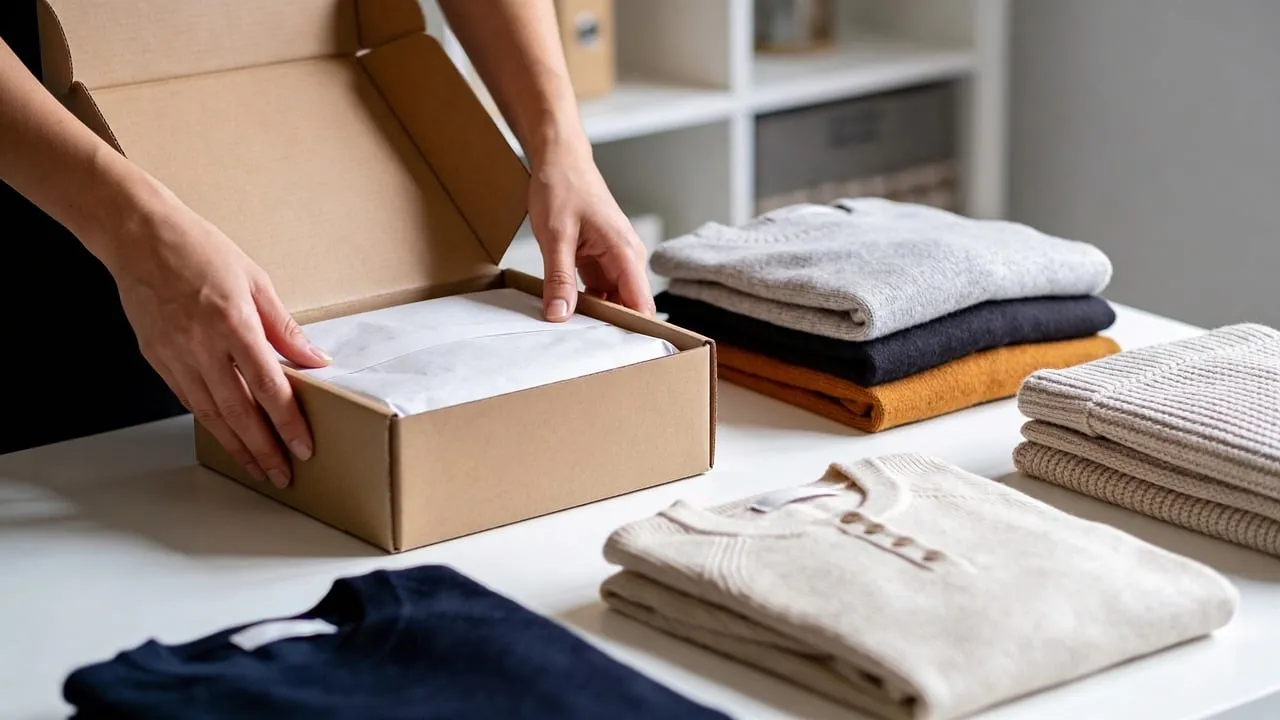
Photo by AhmedAlMaslamani on Pixabay
Buyers check more than you think
On 6 October 2026, Lazada released a regional survey conducted by Cube Asia. According to Znews, it asked 6,000 online shoppers aged 18 to 61 in six Southeast Asian countries, and singled out a group it calls "smart consumers." In Vietnam, that group is about 25% of respondents. According to Dân trí, 59% of them spend more than half of their online budget at official-brand storefronts, and 54% are willing to pay extra for better protection when they transact.
These shoppers still hunt for deals. They also care about product origin, warranty terms and their rights after purchase. What the survey suggests is that for them, finding a good price doesn't mean trading away protection. The customer messaging at 11 p.m. looks like this group: ready to pay more, but wanting to know exactly how they're covered before they spend.
The Mall badge is a promise, pre-packaged
Think about buying a motorbike. Many people go to an authorized dealer even when the price runs a little above the shop down the street, because the dealer gives an invoice and a warranty book, and if the bike has a fault, you know where to take it. Vietnamese has a short saying for this: "tiền nào của nấy," roughly "you get what you pay for." The Mall badge does the job of the dealer's signboard: it packs a promise about authenticity and after-purchase rights into something a buyer can read in one second.
In a product team, a feature has a spec: trigger conditions, outputs, edge cases, an owner. Returns, warranty and invoicing have all of those parts too. When the policy sits at the bottom of the page and says "per regulations" where it should say how many days and who pays, the buyer can't read the promise, and as far as they're concerned there isn't one.
The Mall badge is a shortcut, but not the only road. According to 1thegioi, Thế Giới Di Động, one of Vietnam's largest electronics and phone retail chains, chose not to open a Mall shop and put its effort into its own channel, with a super app as one of five growth pillars through 2030 in the IPO plan of its Điện Máy Xanh appliance chain. In the same article, Di Động Việt, another phone retailer, uses a Mall shop combined with livestreaming as a touchpoint with buyers. The two chains took different routes, and both already had established names before they went onto the marketplaces.
Don't over-read the numbers
It's easy to say certainty sells, but the available data doesn't fully prove it. Two caveats are worth keeping in mind before you take these figures into a budget meeting.
First, Metric.vn's data shows sales concentrating in Mall, not that buyers chose Mall because of returns or warranty. How platforms prioritize official sellers and the sheer scale of the brands may both contribute. Second, the Cube Asia survey was released by Lazada, which benefits from telling a story in which buyers prefer authentic goods. The figures are self-reported and describe only about a quarter of shoppers.
So 126Insights isn't telling you to quit the price race. A more sensible reading: keep pricing disciplined during sale season, and for every dong you plan to spend on deeper discounts, ask whether that dong would keep customers longer if it went into the after-sales promise. TikTok Shop itself, in the VnExpress article, advises sellers to build long-term relationships with customers through product quality, service and transparent information.
Write the spec for certainty before 11/11
A small brand doesn't need a Mall badge to make an equivalent promise. Write it out the way you'd write a feature, and let buyers see it before they have to ask. Four items to review this week:
- Clear origin. The product page should say where the goods come from and what proves it: the factory, import papers, a distribution authorization letter. A single line saying "genuine guaranteed" isn't enough for buyers who care about origin.
- A returns policy in the buyer's language. Replace "returns supported per regulations" with an answer covering three points: how many days to exchange, under what conditions, and who pays return shipping.
- Warranty that's easy to claim. Count the steps a customer takes when an item is faulty, from opening the app to sending the item back. Suppose the count is seven and one step is "wait for the shop to contact you." That's the step to cut.
- E-invoices issued up front. The customer shouldn't have to message for one or wait until month-end. For people buying for a company or buying expensive items, this can be the reason they check out at your shop.
Where does the money come from? Suppose a brand planned a 20% discount for 11/11 (the 11 November shopping festival). It could keep the discount at 15% and use the difference to cover return shipping for 30 days, then state that right under the price. The shopper chasing the lowest price may leave, but buyers willing to pay extra for protection get one more reason to stay.
Tonight, open your best-selling product page and read the policy section as the customer at 11 p.m. would. If they'd have to message the shop to learn where to exchange and who pays, that's the first feature to fix before 11/11.