
Hong Tra Ngo Gia business strategy: a big cup is easy to copy
Hong Tra Ngo Gia grew fast on the feeling of getting more in a big cup, which is easy to copy. Keeping 500 franchise outlets consistent is the hard part.

In 2021, the website of Hong Tra Ngo Gia, a Vietnamese bubble tea chain, listed more than 60 stores across Ho Chi Minh City, Binh Duong and Long An. By mid-2025 the brand announced more than 400. In 2026 the figure is more than 500 (CafeF). All of these are self-reported numbers, and no independent party has counted. Read with as much caution as you like, it is still a network that grew very fast in five years, built on milk teas that cost a few tens of thousands of dong (a dollar or two).
Ngo Gia entered Vietnam in 2019 under the original name Wujia Black Tea Ice (CafeF). According to CafeF, the brand has Taiwanese roots and is run by Hong Tra Ngo Gia Co., Ltd., based in Binh Chanh, Ho Chi Minh City, and grows through franchising (CafeF). Reading the Hong Tra Ngo Gia business strategy through what has been published, 126Insights sees a chain that sells the feeling of getting a good deal, and customers see that feeling right in their hand, in the cup. That advantage helped Ngo Gia grow fast, and it is also the thing rivals can copy most easily. The harder thing to copy is consistent quality and pricing across hundreds of franchised outlets. In September 2026, according to CafeBiz, Ngo Gia itself announced it would pause accepting partners in northern Vietnam, citing the need to “optimize and standardize the system.”
Is Hong Tra Ngo Gia the cheapest chain?
No. In Hanoi, a cup of Ngo Gia costs roughly VND 21,000 to 35,000, while rivals Vien Vien and Man Man have drinks from VND 7,000. CafeF put it bluntly: “Hong Tra Ngo Gia does not choose the lowest price” (CafeF). At the other end of the market, premium chains sell the story of their ingredients; 126Insights analyzed that route in our piece on Phe La's brand strategy with Da Lat oolong.
Ngo Gia sits in the middle and wins on a different detail. Also per CafeF, the chain's size M is “said to be equivalent to size L at some other brands” (CafeF). Customers do not need to compare price lists. They pick up the cup and see they get more for the same money.
It is like a budget rice eatery (quán cơm bình dân) that piles the plate up to the rim: people remember the full plate, and few remember what it cost. Ngo Gia's first Hanoi store, at 70 Truong Dinh, opened in June 2025 and CafeF described it as “near many schools and offices” (CafeF). 126Insights thinks that is exactly the group who want this feeling: a drink they buy often without having to think twice.
The cup is the advertisement
For 126Insights, the large size also advertises itself. A big cup in the hand of a passer-by, on an office desk, in a quick snapshot, all say the same thing without a single word. Ngo Gia's value can be seen in one product photo, and for a mass-market chain that is media you do not have to buy ad space for.
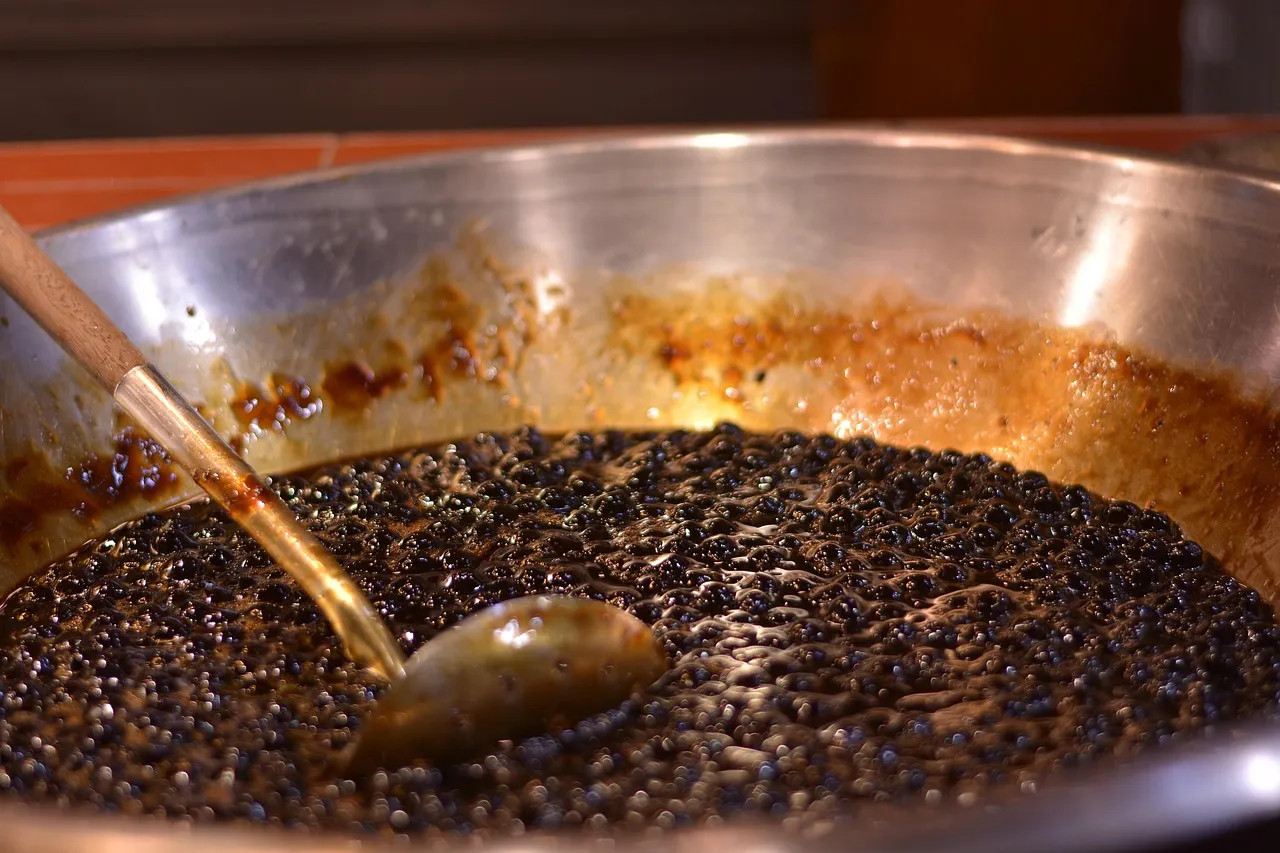
The menu helps too. CafeF sees the fresh-cream black tea and seasonal fruit teas as Ngo Gia's “signature” (CafeF). On preparation, according to the brand as quoted by a review blog, the tea is brewed with filtered water, and the tapioca pearls and taro are cooked fresh every day and thrown away if not sold within about 5 hours (vietnammm.com).
Hong Tra Ngo Gia franchise: every outlet is a signboard
If the cup is the ad, each store is a signboard. According to CafeF, combining fixed stores with mobile points of sale is one factor that helped the chain expand quickly (CafeF). A mobile point sells drinks and also carries the brand's colors out onto the street.
On money, CafeF estimates the initial investment for one outlet at around VND 500 million (CafeF). For the franchise fee alone, the blogs of Sapo and CukCuk, two companies that sell point-of-sale software, both list VND 110 million, covering the right to use the brand and training. Sapo also notes that the contract term has not been published on official channels. These are third-party compilations, so anyone planning to open a store should ask the brand directly.
From 9 to 33 outlets in Hanoi, then a self-imposed brake
According to CafeF, in May 2026 Ngo Gia had 9 branches in Hanoi. By September 2026, per a survey by Kinh tế và Đồ uống (an industry outlet) that CafeF cites, the number was about 33 (CafeF).
On the evening of 23 September 2026, according to CafeBiz, Ngo Gia announced it would take only 30 more franchise partners in the north and then pause, to “optimize and standardize the system” (CafeBiz). To 126Insights, this is the most notable detail in the whole story. A chain that is opening fast limits its own partner count, and the reason the brand itself gives is standardization. Adding outlets is easy. Making the 33rd outlet match the first is hard.
For a brand that sells the feeling of a good deal, it takes only two shops with the same name pouring cups at different levels, or charging different prices, to wear down the very thing customers trust. A Vietnamese saying goes “mua danh ba vạn, bán danh ba đồng”: a good name is bought for thirty thousand and sold for three coins, meaning reputation takes a lot to build and almost nothing to lose. In a franchise chain, that name sits in the hands of hundreds of shop owners at once. 126Insights has written that with Xanh SM, an electric taxi brand, what customers pay for is consistency. For budget milk tea the demand is even tougher, because a customer who wants to switch shops only has to step to the other side of the sidewalk.
Why the big-cup advantage is easy to copy
A bigger cup is something a rival can do within weeks: change the cup mold, adjust the portion, shoot a new set of photos. The salt coffee craze showed something similar: anyone can copy the drink, but the name has to be defended. The “more for the same money” advantage only exists when set next to the shop next door, and it disappears when the shop next door does exactly the same.
Bangkok makes this clear. In early August 2026, Ngo Gia opened its first store in the Sathorn area, priced at 25 baht, with a buy-one-get-one offer and a trimmed menu that dropped the fruit tea group entirely and added 8 winter melon tea drinks and a soy milk tea version (CafeF, CafeBiz). According to CafeBiz, the Thai fan page stresses that Ngo Gia is popular in Vietnam. In the new market, the chain rebuilt the good-deal feeling with promotions and cut the product group that had been its signature in Vietnam.
A store open since August 2026 is too early to draw a conclusion from. But it suggests the good-deal feeling is an advantage tied to a particular street, where customers compare one cup with another. It does not travel with the name to a new place.
What Vietnamese brands can learn from Ngo Gia
Three things you can do, even if you only have one shop:
- Pick one benefit customers can see in a single product photo, and make it so clear it feels slightly “overdone.” A size M equal to a rival's size L is the kind of benefit that needs no explanation.
- Before setting a store-count target, work out whether the franchisee makes money, using the real startup capital, franchise fee and selling price in their area. An owner who is struggling tends to cut portions or change prices on their own, and the big cup disappears before the brand knows.
- Prepare a second layer of value before rivals copy the first: a recipe that is hard to reproduce, a process that keeps quality even, a uniform price across outlets. Ngo Gia gave standardizing its system as the reason for pausing partners in the north. For a small shop, building the process from the start is far cheaper than fixing it after dozens of outlets exist.
126Insights' view in one sentence: fast replication and a strong brand are two different jobs. If the shop next door sells a bigger cup than yours tomorrow, what reason will customers still have to come back to you?