
Claw machine business: lessons from Lawson's empty corner
Lawson puts claw machines in unused corners with prizes the shelves don't sell. Vietnamese minimart owners can run a 4-week trial.

At a Benex game centre in Kawasaki, Minae Kamata, a 25-year-old homemaker, was watching her baby in a stroller while going after toilet paper in a claw machine. She won it on the second try, at 100 yen a go. “If you’re a little lucky, it’s like buying something on discount,” she told AFP (France24, Taipei Times).
Stories of Japanese players winning eggs, rice and laundry detergent ran in many outlets in late October 2026. If you are weighing a claw machine business for the year-end shopping season and Tết 2027 (Vietnamese Lunar New Year), or you are staring at an empty corner in a minimart and don't know what to put there, this story is useful, as long as you read it correctly. Our view at 126Insights: what is worth copying is how to sell a few minutes of suspense on a corner that earns nothing today. The machine is only the tool. And at Lawson convenience stores, the prizes are things customers can't buy on the shelf, while eggs and rice show up in the big game centres.
What are Japan's claw machines giving away, and where?
Read the sources closely and you find two different models that are easy to blur together.
The first is the large game centre that turns itself into a supermarket you play for. According to figures Benex published itself and AFP cited, the chain has 5 sites in the Tokyo area and more than 1 million visitors a year. In 2025 Benex dropped video game and token machines to focus on claw machines, and, again per the company, household goods revenue grew 2.6 times in two years (France24, SCMP). At the Kawasaki site, hundreds of machines hold soft drinks, sweets and laundry detergent, according to an AFP photo caption on Yahoo SG. The “Everyday Supermarket” zone at Tama no Kuni (Tama, Tokyo) opened in December 2025 with 105 machines for food and household goods, and winners get their prizes delivered home so they don't have to carry them (The Star). According to SCMP, Aeon Fantasy, the entertainment company in the Aeon group, opened its first zone devoted to food and household prizes in October 2025, aimed at mothers.
The second model is the convenience store that uses dead space. Since spring 2024, Lawson has placed small claw machines in unused spots inside its stores, reaching about 1,330 sites by July 2026 (The Star). The news site Essential Japan reported that by 8 August 2025, 1,109 Lawson stores had Taito machines at 100 yen a play. The prizes are plush toys and character goods that the stores don't sell otherwise, and at the time Lawson was planning exclusive prizes you could only win from in-store machines.
Both models sit on a big market. According to the Japan Amusement Industry Association (JAIA), the prize game market (games that pay out goods, including claw machines) reached 417.7 billion yen (about USD 2.7 billion) in 2024, more than doubling in 10 years and making up nearly 70% of arcade revenue (Daily Star). In fiscal 2024 Japan had 258,903 prize game machines, also per JAIA (The Star).
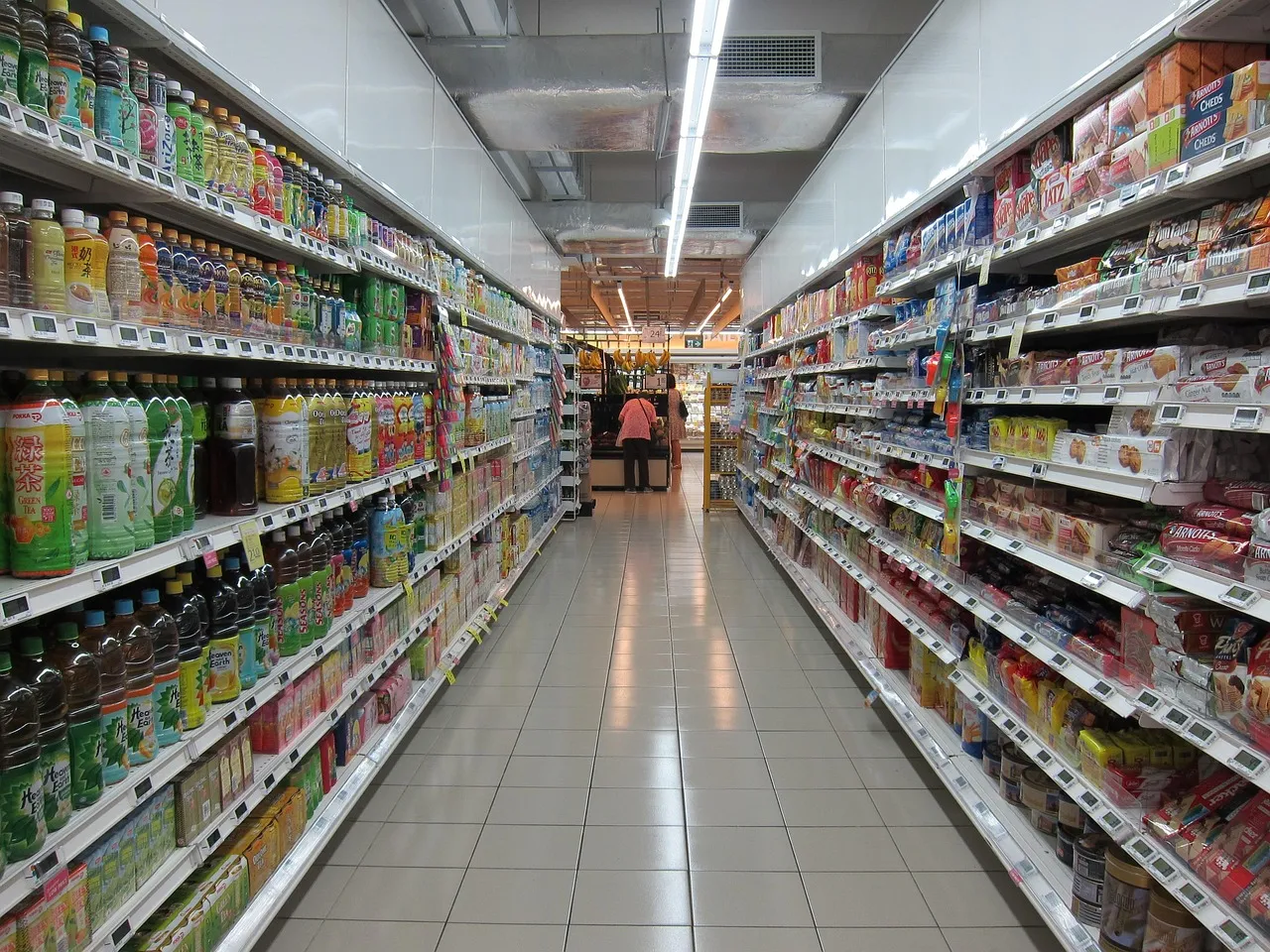
Why do people pay to win things they could simply buy?
Inflation in Japan has hovered around the central bank's 2% target. That is small by many countries' standards, but it is a shock for a country used to prices that stood still or fell (Daily Star). Naoko Kuga, a consumer behaviour specialist at NLI Research Institute, says spending on food and daily necessities has fallen for 5 years running because it is the first thing households cut. In her view, retailers are trying to make shopping more fun to stimulate demand and ease the guilt of spending (Taipei Times).
Sachiko Iyokawa, 49, won two boxes of premium eggs, cheaper than at the supermarket. “Normally I'm careful, but here I treat myself a little,” she said (France24). A box of eggs bought off the shelf is an expense. A box of eggs won from a machine is a trophy. Same item, very different feeling.
But look at the other side too. In the AFP report carried by the Daily Star, Chiaki Sugai, 56, a sushi restaurant worker, played for two or three hours and wheeled away a cart full of prizes, spending nearly 8,000 yen. It is like the ring toss at a village fair: the stuffed bear may cost less than the rings, but people remember the moment a ring dropped over the bottle neck. The bargain is often just a feeling. A seller should know that the feeling is what is being sold, and sell it honestly. This is also the logic of shoppertainment, where shopping is staged like a show, except that here the stage fits into one corner of a shop.
Claw machine business in Vietnam: what photobooths have shown
Vietnam already has one industry showing that customers will pay for a few minutes of self-service experience: photobooths. Lê Anh Tú, a master's-level lecturer at the University of Economics and Finance in Ho Chi Minh City, puts photobooths in the same group as spending on emotional experiences, like music events or opening blind boxes (Saigon Times). Also per Saigon Times, Trần Thị Như Quỳnh, founder of Photobooth Nghệ, put in more than VND 1 billion of starting capital: about 50% for equipment, about 40% for space and concept, and the rest for premises, marketing and staff. Customers serve themselves, so few people are needed on site.
On Kenh14, a shop owner named Thảo says her studio invested around VND 1 billion and charges VND 70,000 to 100,000 per session. Quốc Bảo says that on his chain's own data, a good store recovers its investment in 8 to 12 months. Another Kenh14 piece, about a studio opened in late 2024, is headlined with the claim that it takes 10,000 sessions to recover the investment. Those are individual shops, and they speak only about photobooths. The sector has also grown fast: Photoism (a Korean franchise) went from 1 to 13 branches in a year, and PHOTO TIME had 51 stores as of September 2025 (CafeF).
The lesson for shop owners is in how you count. A photobooth is a destination: customers come to take photos on purpose. A claw machine corner in a minimart rides on the foot traffic you already have. So don't compare total revenue. Compare revenue per machine and per square metre. Vietnamese has a saying, “tấc đất tấc vàng” (every inch of land is an inch of gold), and the empty corner by the cash register is already inside the rent you pay each month, much as Katinat, a Vietnamese café chain, treats rent as advertising spend.
What goes wrong if you copy the pay-per-play machine?
The first problem is legal. Vietnamese rules on prize-awarding electronic games describe games of chance on a machine where players pay and can win money. A claw machine pays out goods, so it is unclear whether it falls into that group. Before installing one, ask the Department of Industry and Trade (Sở Công Thương) where you operate, or a lawyer, about the rules currently in force. Don't rely on the fact that another shop already has one.
The second problem is trust. A minimart's regulars are neighbours who buy every day. If they find the machine hard to win and nobody explains why, what you lose is the person who buys milk every morning, which is worth far more than a few plays.
The third problem is on the shelf itself. Putting eggs and rice in a minimart machine means letting customers play for the same item sitting on the shelf next to it. A game centre like Benex has no shelf competing with its own machines. A convenience store should learn from Lawson: make the prize something you can't buy. And if the prizes never change, the machine soon becomes furniture.
How to test one small corner for 4 weeks
The safer version for a minimart, an F&B chain or a mother-and-baby shop is “spend X dong, get one play.” Winning a play by making a purchase involves an element of chance, so you need to complete the formalities under current promotion regulations. The Department of Industry and Trade is the first place to ask. Once the procedure is clear, run the test in these steps:
- Pick an empty corner near the cash register, where customers see the machine just as they pay.
- Choose prizes that aren't on the shelf: private-label goods, a limited Tết 2027 edition, or slow sellers repackaged as a set.
- Set the threshold a bit above your current average order. Suppose the average order is VND 85,000; the threshold could be VND 120,000.
- Post the rules and the list of prizes currently in the machine.
- Track two numbers against the previous 4 weeks: average order value and return rate, through a membership card or a loyalty phone number.
If average order value doesn't rise after 4 weeks, stop. You have only tested one small corner. This follows the same spirit as selling before you invest in building big: check your assumption with customers' real money, then buy more machines.
For now, walk around your shop and ask yourself: which corner are you paying rent on without selling anything, and what prize could customers only get by standing in that corner?